Genshin Impact's Inazuma Region Expansion: A Look Back at the Land of Electro's Phased Debut and Its Lasting Impact
Genshin Impact Inazuma leaks revealed a thrilling, phased nation rollout, fueling massive anticipation for the Electro-themed 2.0 update.
In the annals of live-service gaming, few content updates have generated the sheer anticipation that surrounded the debut of Inazuma in Genshin Impact. Back in mid-2021, the game was experiencing unprecedented growth, with major updates arriving every six weeks to feed a voracious and curious player base. The hype for what was then known as the 2.0 Update, however, dwarfed all previous releases. Why was this the case? The answer was simple: it promised the long-awaited, Electro-themed nation of Inazuma, a region teased in miHoYo's roadmaps since the game's earliest days. Leaks from that period, particularly from the well-known source Genshin Report, painted a picture of a grand, multi-part rollout, setting the stage for one of the game's most significant expansions.
The Phased Unveiling of a Nation
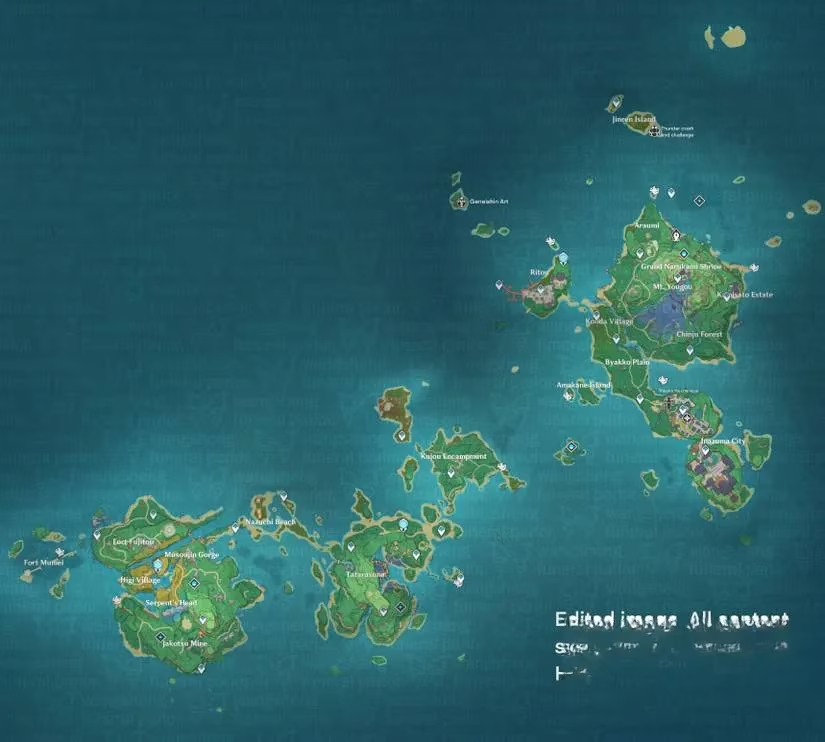
The core revelation from the 2021 leaks was a strategic decision by the developers: Inazuma would not be unveiled all at once. This was a departure from the initial release of Mondstadt and Liyue. According to the information, the 2.0 Update would introduce only three of the region's islands, with the rest planned for subsequent patches throughout late 2021 and early 2022. This approach allowed for deeper narrative pacing and environmental storytelling, building the nation piece by piece. The initial trio of islands offered a tantalizing glimpse into the diverse and often perilous landscape of the Electro Archon's domain.
A First Look at the Initial Islands
The leaks provided specific details on the three islands slated for the 2.0 debut, descriptions that were later confirmed in official previews:
-
Watatsumi Island: Described as an island where "plants and trees grow densely." Its distinct, vibrant flora hinted at a unique ecological and cultural identity separate from the Shogun's direct influence, foreshadowing its role as a center of resistance.
-
Seirai Island: Pitched as a place where "some disaster seems to have occurred," with its center "consumed by an eternal storm." This immediately established it as a zone of high danger and mystery, ripe for exploration and world quests that would uncover its tragic past.
-
Tsurumi Island: Shrouded in mystery and fog, this was an island where "no one has set foot here in many long years." This description promised a deeply atmospheric and potentially puzzle-heavy exploration experience, which it ultimately delivered.
The Legacy of the Inazuma Rollout
Looking back from 2026, the phased release of Inazuma can be seen as a foundational strategy for Genshin Impact's ongoing success. Did this piecemeal approach pay off? The evidence suggests a resounding yes. By not overwhelming players with an entire nation at once, miHoYo was able to:
-
Maintain Consistent Content Cadence: It created a reliable pipeline of major explorable areas over several months, keeping player engagement consistently high.
-
Deepen Narrative Impact: The story of the Vision Hunt Decree and the resistance on Watatsumi Island had room to breathe and develop across multiple versions, leading to more impactful narrative climaxes.
-
Showcase Environmental Diversity: Each new island felt like a distinct event. The perpetual storm of Seirai, the fog-bound puzzles of Tsurumi, and the later additions like the automated ruins of Kannazuka or the elegant cultural hub of Narukami Island each offered a unique gameplay and visual identity.
The leaked map, complete with event markers, fueled weeks of speculation and theory-crafting within the community. It demonstrated how anticipation could be curated and sustained. The subsequent live streams and official releases built upon this leaked framework, transforming speculation into experience.
From Leaks to Lasting Foundations
The Inazuma expansion set a precedent for how Genshin Impact would introduce major new regions. The model established here—initial core release followed by substantial area expansions over subsequent patches—was later refined for the release of Sumeru's rainforests and deserts, and Fontaine's aquatic landscapes. The leaks of 2021, while exciting at the time, were just the first whisper of a content strategy that would ensure the game's world felt perpetually growing and evolving.
The excitement for those first three islands—Watatsumi, Seirai, and Tsurumi—was a defining moment for the community. It proved that player appetite for new, fully-realized worlds was insatiable and that miHoYo's ambition in building Teyvat was far from complete. The success of this rollout cemented Inazuma not just as a new region on the map, but as a landmark in Genshin Impact's evolution from a hit game to a persistent, ever-expanding cultural phenomenon.