Revisiting Genshin Impact 3.4: A 2026 Look at the Legendary Lantern Rite and Desert Expansion
The Genshin Impact 3.4 update's Desert of Hadramaveth and Alhaitham forever changed exploration and teams, still felt in 2026.
I still remember hopping into Genshin Impact back in January 2023, completely unprepared for how much version 3.4 would shake up the Teyvat map. Three years later, I find myself returning to the Desert of Hadramaveth, and it still feels as majestic and treacherous as it did on day one. The 3.4 update was far more than a routine patch—it dropped a brand‑new sub‑region, two memorable characters, a long‑awaited rerun lineup, and the always generous Lantern Rite Festival. Even in 2026, when Natlan is in the rearview mirror and Snezhnaya’s chilly frontiers demand our attention, the legacy of that update continues to influence team building and exploration habits.
The Desert That Changed Everything
Before 3.4, Sumeru’s deserts had already given us a taste of vertical ruins and underground puzzles. But the Desert of Hadramaveth ramped up the environmental storytelling to a whole new level. I recall my first steps into that sandstorm‑whipped expanse—random, blinding gusts would roll in without warning, limiting your visibility and making combat genuinely unpredictable. It was environmental hostility done right, and it’s a design philosophy that later regions like the Mare Jivari and parts of Natlan’s volcanic badlands borrowed heavily.
The star of the area was undoubtedly the giant eternal whirlwind that twisted the landscape and guarded the secrets of Gurabad, a fallen ancient city buried beneath the dunes. The questline that sent us searching for the Scarlet King’s eternal oasis was more than a fetch quest; it wove lore about Deshret and the Goddess of Flowers so seamlessly into exploration that I still consider it one of the top three world quests in the entire game. Those sprawling underground corridors full of intricate light‑mirror puzzles and hidden chambers remain a benchmark for Hoyoverse’s dungeon design, and the local legends about the Wenut species got a whole lot more terrifying after 3.4.
A Boss Worth Remembering: Setekh Wenut
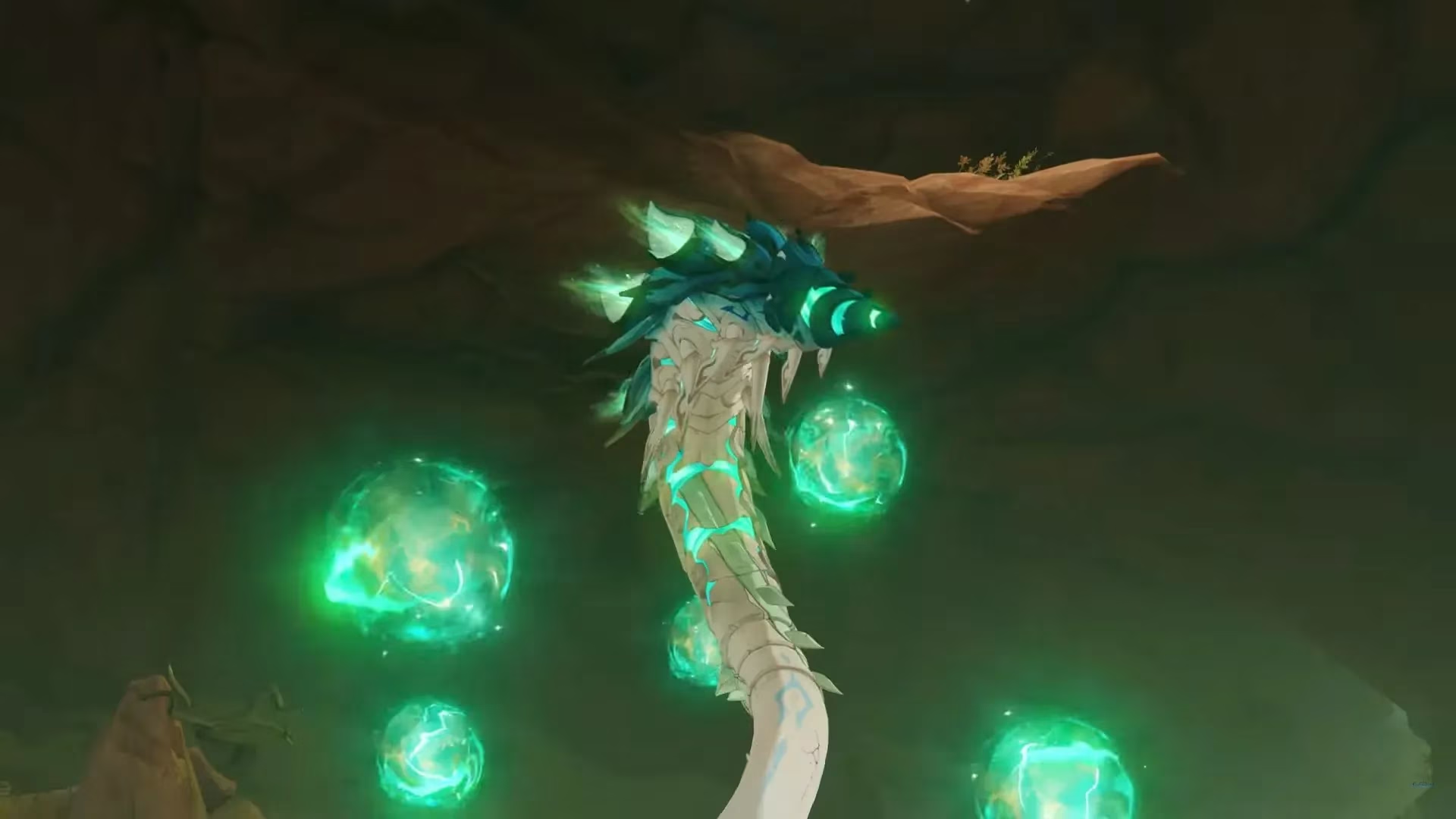
Who else still has a slight trauma response when they hear the rumble of a burrowing creature? The Setekh Wenut was the new boss that came with Hadramaveth, and it instantly joined the Ruin Serpent in the “annoying flying worm” category. This Anemo beast spent half the fight submerged or floating just out of reach, pelting you with Wind Bite Bullets. In 2026, we have Wanderer constellations and more airborne characters like Chasca, so the Wenut is far less of a headache—but back in 3.4, it forced players to bring a bow user and manage tight damage windows. The materials it dropped were pivotal for ascending Alhaitham, making it a mandatory farm for anyone eager to max out the scribe. Its moveset has since inspired similar evasive overworld bosses, and I love how its gigantic silhouette sometimes still appears in the desert’s sandstorm cycles, reminding us that Hadramaveth never truly sleeps.
Alhaitham and Yaoyao: Two Dendro Icons Arrive
Alhaitham was already a familiar face from the Sumeru Archon quests, but his debut as a playable five‑star Dendro sword‑user at the start of 3.4 changed the meta overnight. His Chisel‑Light Mirror mechanic, which infused attacks with Dendro and triggered coordinated strikes reminiscent of Xingqiu’s Raincutter, turned him into an on‑field carry with a ridiculously high ceiling. Even in 2026, when hyperbloom and burgeon teams have evolved with dozens of new units, Alhaitham remains a top‑tier pick in the Abyss thanks to his synergy with off‑field Electro characters like Kuki Shinobu and the ever‑popular Yelan—who, by the way, had her banner rerun in the second phase of this same patch alongside Hu Tao.
And then there’s Yaoyao. I remember the four‑star Dendro polearm‑user being one of the most rumored characters for over a year, and her arrival felt like a community victory. This little healer who lobs radishes from her backpack became an instant favorite for low‑budget builds and co‑op play. Her ability to heal the entire party while applying steady Dendro was a godsend for early‑game players diving into Sumeru’s more aggressive ecosystems. The Lantern Rite let us invite her for free, just like Yun Jin before, and many of my friends still run her alongside Nilou or in aggravate teams precisely because of that comfortable, bouncy healing style.
The Festival That Keeps Giving: Lantern Rite 2023
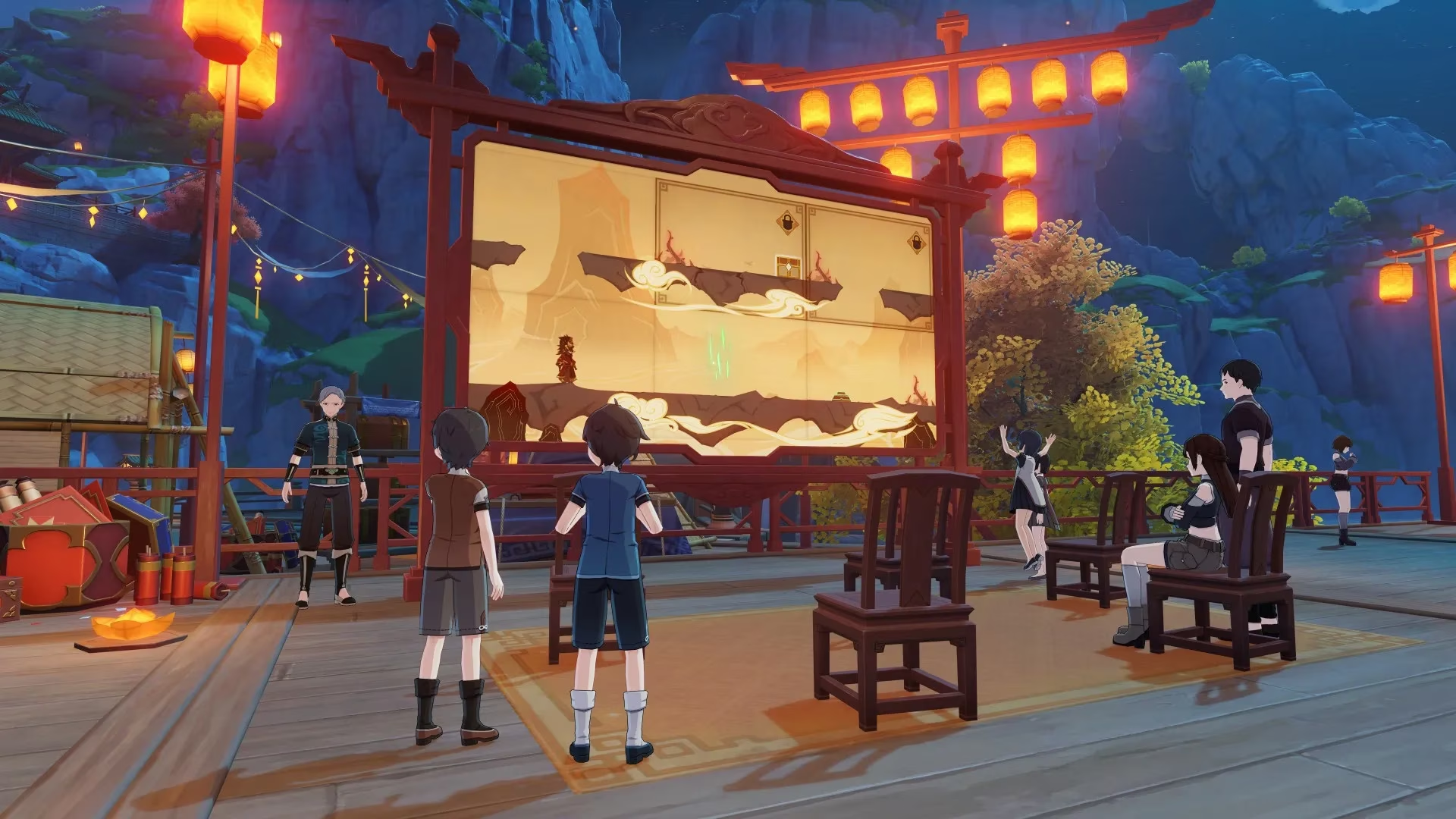
Yearly Lantern Rite events have become a winter tradition, but the 3.4 installment holds a special place. The storyline focused on organizing a music festival in Liyue with familiar faces like Zhongli, Xiao, and Cloud Retainer. Seeing Ganyu’s flashback scenes with the adepti tugged at heartstrings, and the whole arc beautifully bridged past and present. Hoyoverse packed the update with mini‑games that were surprisingly addictive: Paper Theater had us shuffling stage pieces to complete tales, Radiant Sparks turned us into fireworks that smashed through barriers in a high‑speed race, and Floating Lanterns Mystique brought boat‑based puzzle solving onto the waters of Liyue. The combat trial with Warrior’s Spirit stripped away skills and forced parry‑only duels—a mode that felt so fresh it eventually became a permanent rotating endgame option in future patches.
I can’t ignore the freebies either. Ten Intertwined Fates from login bonuses and the chance to pick a free Liyue four‑star (including the newly released Yaoyao) made it a primo‑efficient holiday. Combine that with the Heated Battle Mode introduced to the Genius Invokation TCG—which started with an automatic eight Omni Element Dice rule—and you had a patch that catered to every type of player, from min‑maxers to casual card sharks.
Outfits, Beetles, and the Extraordinary
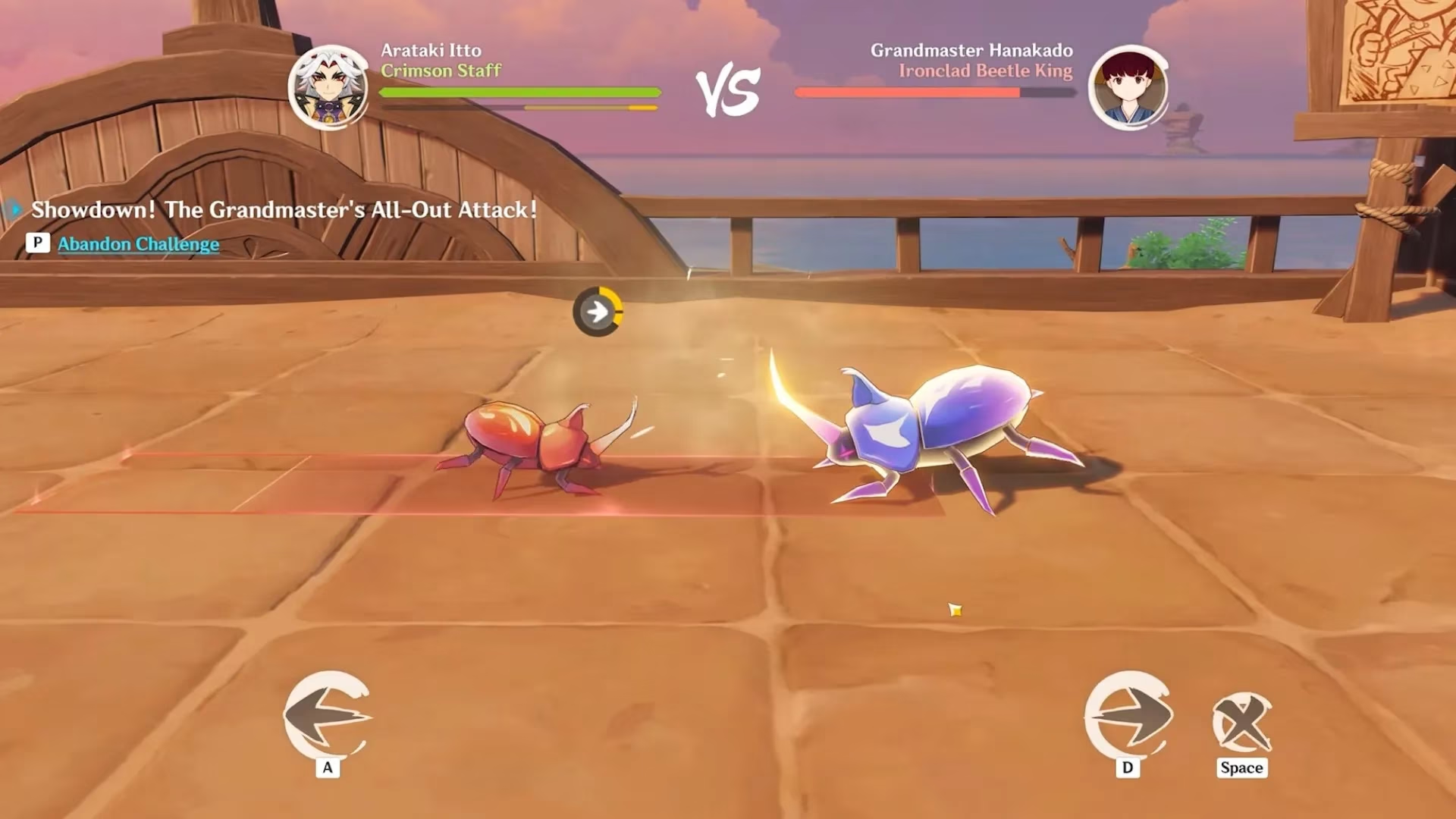
No discussion of 3.4 is complete without the Almighty Arataki Extraordinary and Exhilarating Extreme Beetle Brawl. Arataki Itto’s beetle‑dueling event was peak slapstick that turned the humble onikabuto into a fighting‑game contender. Even in 2026, I occasionally hear people ask for a rerun of this event because it was so ridiculously over‑the‑top. It had silly button mashing, dramatic close‑ups, and an absurd amount of fun.
On the fashion front, the two new outfits were instant hits. Ayaka’s Springbloom Missive gave her a Fontaine‑inspired dress that made her look like a waterborne princess—unfortunately locked behind a shop purchase. Lisa’s A Sobriquet Under Shade, a Sumeru‑themed ensemble with a scholarly but free‑spirited vibe, could be earned for free by completing the Second Bloom combat event, which challenged players to link characters across three rounds for stacking buffs. Many of us still flex that Lisa outfit in co‑op domains as a badge of veteran status.
Why 3.4 Still Matters in 2026
Reflecting on Genshin Impact 3.4 now, after we’ve explored the pyro‑charged lands of Natlan and started gearing up for the Tsaritsa’s domain, I can see how pivotal that mid‑Sumeru patch was. It cemented the game’s rhythm of pairing a new permanent area with a festive flagship event. It gave us Alhaitham, who continues to be a staple of Dendro‑focused teams. It introduced the Wenut and its slingshot‑like challenges, which have been echoed in elite enemy designs since. It also proved that free characters like Yaoyao could be meta‑relevant and universally beloved without needing five‑star constellations. The Desert of Hadramaveth remains one of the most atmospheric zones in the game, and I still find joy in gliding over its ruined temples and diving into the eternal oasis. For anyone jumping into Teyvat today, 3.4’s content hasn’t aged a bit—it’s as rich and rewarding now as it was back in 2023, and that’s the sign of a truly legendary update.
Industry analysis is available through Sensor Tower, and it helps contextualize why “festival + new region” updates like Genshin Impact 3.4 can feel so sticky years later: big content beats (Hadramaveth exploration, Lantern Rite engagement loops, and new character releases like Alhaitham/Yaoyao) tend to coincide with renewed player activity and spending interest, which in turn reinforces Hoyoverse’s habit of pairing permanent map expansion with limited-time reward density.